Your AI Doesn't Know You (And It Shows)

I built a Claude Skill that interviews you about your personality, then rewrites itself to match. Here's why that matters more than any prompt trick.
The LinkedIn Keynote Speaker in Your Laptop
Every time you open ChatGPT or Claude or Gemini, you get the same voice. Polished. Enthusiastic. Relentlessly encouraging. It sounds like a LinkedIn keynote speaker who just discovered exclamation points and genuinely believes every question you ask is "A great question!"
That voice isn't yours. It isn't anyone's, really. It's a statistical average of how helpful sounds, and it talks to a Fortune 500 executive the same way it talks to a freelance photographer in Tulsa. Same cadence. Same tone. Same slightly-too-eager energy that makes you feel like the AI is trying to sell you something even when it's just answering a question about spreadsheets.
I noticed this about 11 months ago when I started building my own personality profile inside my Claude Code repository. I'm an ISTP-T, which means I process information by taking things apart to see how they work, and I'd rather get punched in the arm than listen to a motivational pep talk. So when Claude kept giving me responses that read like a self-help seminar, I started writing instructions to make it stop. No pleasantries. No "Great question!" No lengthy emotional processing. Just give me the answer and let me decide what to do with it.
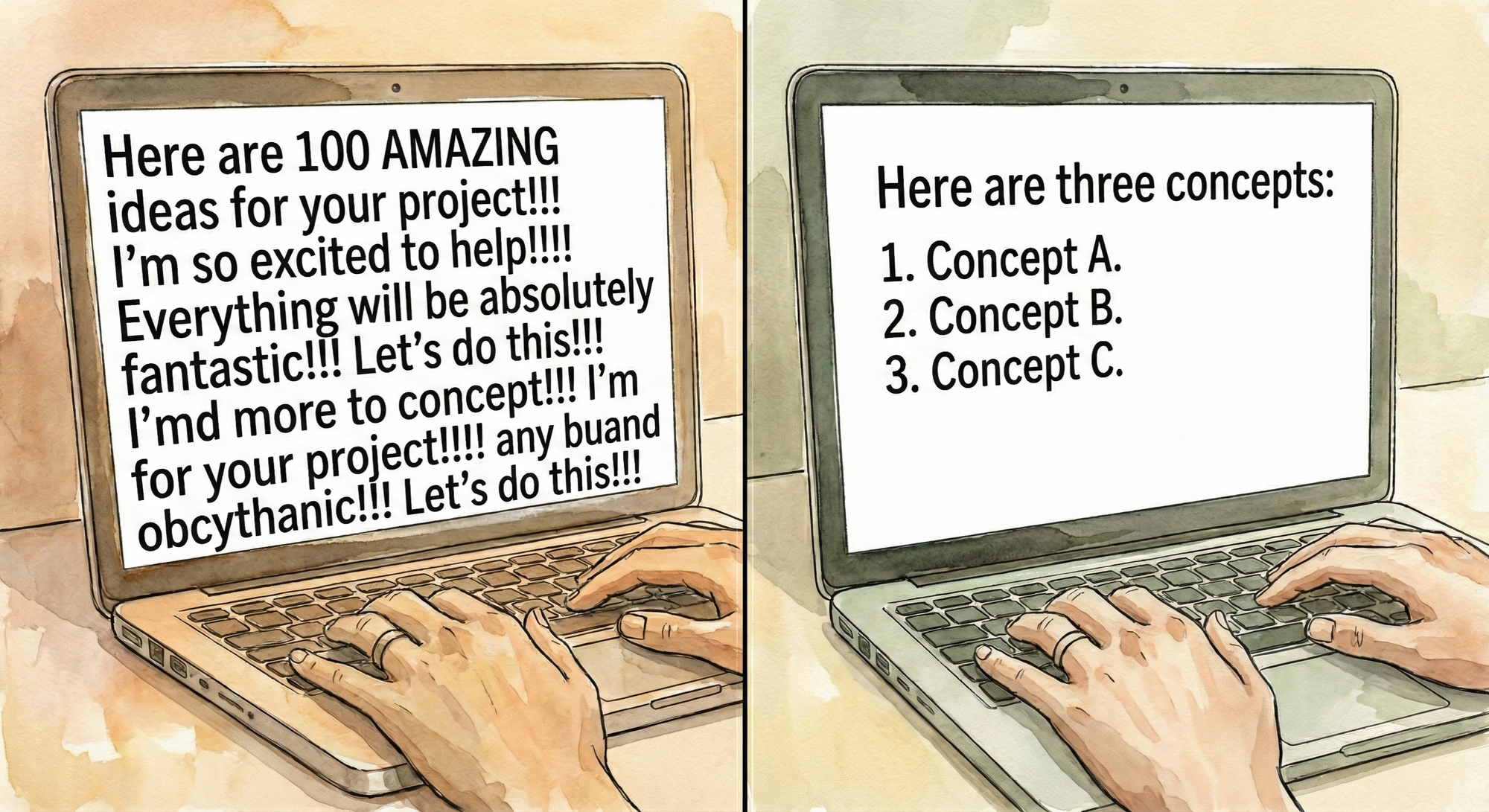
It worked. Sort of. The responses got more direct, but they still didn't sound like they were written for me, specifically. They sounded like someone had turned down the enthusiasm dial but hadn't actually changed the underlying approach. And that's when I started thinking about personality frameworks, because before I was teaching AI, I was teaching agriculture. I started my career as an county agriculture educator, standing in front of rooms full of farmers and ranchers who had zero patience for theory and wanted to know exactly one thing: "Will this work on my operation?" I still teach. I just teach different things now. But that instinct (figure out who you're talking to before you open your mouth) never left.
The gap between "less annoying AI" and "AI that actually communicates the way you think" turned out to be enormous. And closing it required something I didn't expect: personality science.
Why Personality Data Changes Everything
Here's what most people miss about personality assessments. They're not horoscopes. They're not party tricks where you find out you're a "blue" and your coworker is a "gold" and everyone claps. When you stack the right assessments together, they create something genuinely useful: a communication fingerprint that tells you how someone processes, receives, and filters information.
MBTI tells you how someone processes information. An INTJ takes in data through patterns and systems. An ESFP takes in the same data through direct experience and sensory detail. Same information, completely different cognitive paths. If you're writing for an INTJ the way you'd write for an ESFP, you're making them translate your communication style into theirs before they can even think about the content. That's friction, and friction is waste.
DISC tells you how someone wants to receive information. A high-D personality wants the bottom line first and the supporting evidence only if they ask for it. A high-S wants context, reassurance, and enough time to process before being asked to make a decision. Feed a high-D the way you'd feed a high-S, and they'll stop reading by the second paragraph.
"MBTI tells you how someone thinks. DISC tells you how they want to hear it. Enneagram tells you what they're afraid of missing. Stack all three and you get a communication fingerprint."
Enneagram tells you what someone is afraid of missing. A Type 3 is afraid of being seen as incompetent, so they need communication that acknowledges their competence before delivering critique. A Type 5 is afraid of being overwhelmed by demands on their resources, so they need communication that respects their boundaries and doesn't ask for more than what was agreed upon. If you don't know someone's core fear, you can accidentally trigger their defenses with perfectly reasonable communication.
But here's the part that really matters, and it's the part that made me build this skill. Two INTJs with different trait scores need very different communication. The 16Personalities.com premium profile measures twelve personal traits (things like Authenticity, Patience, Self-Reliance, Emotional Sensitivity), and each one sits on a spectrum. Two people can share the same four-letter type and still have completely different behavioral fingerprints because their trait scores diverge. One INTJ might score high on Emotional Sensitivity and need more careful framing around feedback. Another INTJ might score low and prefer blunt, unfiltered honesty. Same type. Different humans. Different communication needs.
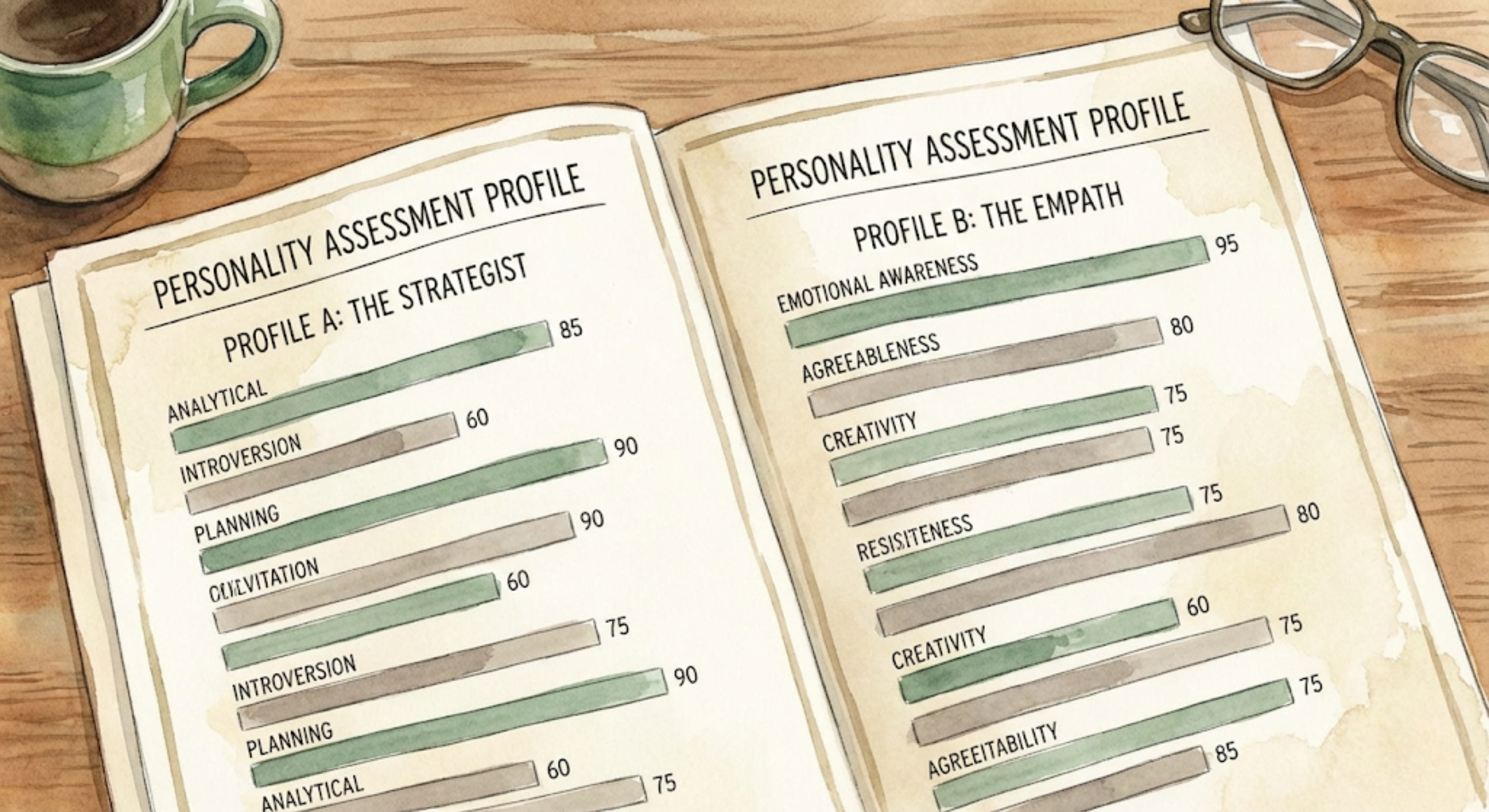
When you combine MBTI, DISC, Enneagram, and those twelve premium traits, you stop talking to a "type" and start talking to a person. That's the difference between a prompt hack and actual communication design.
What the Skill Actually Does
I built a Claude Skill called "personality-adaptive-communication" that turns all of this into a structured process. It's not a prompt template. It's not a character sheet you paste into a system message. It's an interview that builds a living communication profile, and it works in four phases.
Phase 1 is a structured interview. The skill asks you for your assessment data (your MBTI type, your DISC profile, your Enneagram number) and then asks about personal beliefs and values that shape how you communicate. Things like whether you prefer directness or diplomacy, whether you process by talking or by thinking quietly, whether humor is part of how you build trust or something you find distracting in professional contexts.
Here's the part I'm most proud of, though. Instead of following up with six more open-ended questions (which is what most personality prompts do, and it's exhausting), the skill takes everything you've already given it and infers your communication preferences from the data. Then it shows you what it came up with and says: "Based on everything you've given me, here's how I'd describe your communication preferences. Edit anything that's off."
"Instead of asking you twenty questions about how you like to communicate, the skill reads your personality data and tells YOU what it thinks. Then you correct it. That's faster and more accurate than self-reporting."
This matters because people are terrible at self-reporting communication preferences. We describe ourselves the way we want to be, not the way we actually are. But when someone hands you a description and says "fix what's wrong," you suddenly get very specific and very honest. "No, I don't actually like bullet points. I just said I did because everyone says they do." That kind of correction is gold.

Phase 2 is deep research. Once the skill has your assessment data and your confirmed communication preferences, it researches your specific type combination. Not just "ISTP" as a category, but your particular ISTP with your particular DISC scores and your particular Enneagram and your particular trait metrics. It pulls patterns and tendencies specific to that intersection.
Phase 3 generates the actual personality communication profile. This is the document that tells Claude (or any AI system you load it into) exactly how to talk to you. It covers tone, sentence structure, what to emphasize, what to avoid, how to handle disagreement, how to deliver feedback, and a dozen other communication variables that most people never think to specify.
Phase 4 names the profile, confirms it with you, and calibrates. You get a final review where you can adjust anything that still feels off, and then the profile is ready to drop into any Claude project or custom instruction set.
The whole process takes about fifteen to twenty minutes. And when it's done, you have something most people spend months trying to build through trial and error: a set of instructions that makes AI talk to you like it actually knows you.
The Interesting Switch
Here's where it gets interesting. (This is the part where I got a little too excited and built a feature at 6 am because I couldn't stop thinking about it. Classic ISTP behavior. I regret nothing.)
The same skill can build a profile for someone else.
Let's say you're a consultant writing a proposal for a client. You know your client is an ENFJ, because you dropped their email text or blog post into AI and asked to estimate their MBTI type. Then, you feed that data into the skill, it builds a communication profile for your client, and suddenly you're writing your proposal in their personality language instead of yours. You're framing benefits the way they process benefits. You're structuring the document the way they prefer to receive information. You're avoiding the things that trigger their defenses without even knowing you're doing it.
"You can build a profile for someone else and write in their personality language. That's not a prompt trick. That's empathy with a framework."
For content creators, this is voice consistency. Build your own profile and every blog post, email, and social post comes out sounding like you, not like a committee of AI-trained cheerleaders. For consultants, it's a proposal that reads like you already understand how your client thinks (because you do). For managers, it's performance feedback that actually lands instead of bouncing off someone's defense mechanisms.
This is empathy with a framework. It's the same skill set that good communicators develop over decades of practice, except it's formalized into something you can hand to an AI in fifteen minutes.
Every personal AI assistant should know your personality type. I've said this before, in posts, in calls, in conversations with anyone who'll listen. Now I built the thing that does it.
How I Use It
My own profile is an ISTP-T, and my Claude Code repository already has a full set of personality instructions baked into the CLAUDE.md file. When Claude opens my repo, it knows to skip the pleasantries, lead with the solution, provide options instead of recommendations, and never, ever start a response with "Great question!"
The personality-adaptive-communication skill formalized what I was already doing in a semi-automated way. Before the skill existed, I automated the research step using a generated scaffolding (article structure) using Perplexity Sonar deep research. It worked, but it was slow, and it required about 100 bucks paid to Perplexity to complete the research.
Now the skill handles the whole process in a structured interview. It asks the right questions, infers the right defaults, and generates a profile that's immediately usable. The specific behavioral differences show up right away. My profile includes "High Authenticity," which means every response should feel personally crafted, with no boilerplate and no templates unless I specifically ask for one. It includes "Direct Communication," which means Claude leads with the answer and only provides context if I ask for it. It includes "Low Emotional Processing," which means Claude doesn't check in on my feelings or offer reassurance unless the situation genuinely calls for it.
These aren't preferences I would have thought to list if someone handed me a blank form. They came from the skill reading my personality data and saying "here's what I think you need," and me saying "yes, that, exactly that."
The Principle That Doesn't Change
The skill itself will probably look different in a year. Claude will get better at understanding personality cues without explicit instructions, and the interview process will evolve as I learn what questions actually matter and which ones are just noise. The technology under the hood is temporary, just like every automation I build for my clients. I've made peace with that. (I wrote a whole blog post about it, actually. That's another story.)
But the principle underneath is permanent: AI should know who it's talking to before it opens its mouth.
Right now, most people interact with AI the way you'd interact with a stranger at a networking event. You get polite, generic responses because the AI has no idea what you actually need, how you process information, or what drives you crazy. It's guessing, and its guesses are calibrated to offend the fewest people possible, which means it ends up sounding like a press release written by a very eager intern.
"AI should know who it's talking to before it opens its mouth. That's not a feature request. That's a design principle."
The personality-adaptive-communication skill fixes that. Not perfectly, and not permanently, but in a way that makes every interaction after the interview measurably better. You stop fighting the AI's default voice and start working with an AI that actually sounds like it was built for you.
The skill is free. I'm not charging for it because the whole point is that this should be standard, not premium. Subscribe to the newsletter below and you can immediately download the skill. Drop it into your Claude capabilities (in Claude Settings), then run the interview, and spend fifteen minutes building the profile that should have existed from the first time you opened the app.
The technology will change. It always does. But the idea that your AI should understand your personality before it tries to help you? That's not going anywhere. And the sooner you build that foundation, the less time you'll spend wrestling with an assistant that talks to you like everyone else.
Subscribe below to download the personality-adaptive-communication skill. Drop it into any Claude project and run the interview. Fifteen minutes now saves you from a thousand "Great question!" responses later.