Visibility Isn't Credibility (A Friendly Reminder)


Only 1% of LinkedIn users post content weekly.
Let me say that another way: 99% of LinkedIn users never post anything. They scroll, they lurk, they occasionally update their profile when they need a job. But they don't create content.
One percent. Out of over a billion members, about 3 million people actually create content regularly.
This creates an interesting problem.
The people you see most on LinkedIn aren't necessarily the people who know the most. They're the people who post the most. Those are two different things.
Posting is a skill. Expertise is a different skill. They overlap less than you'd think.
The Visibility Trap
When you scroll LinkedIn looking for insights on AI, automation, or running your business, you're not seeing a representative sample of experts.
You're seeing the 1% who post.
Some of them are genuinely experienced. They've done the work, made the mistakes, refined their approach over years. They post because they have something worth sharing.
Some of them are really good at posting. They understand hooks, engagement, and what gets likes. They've built an audience. Whether they've built anything else is a separate question.
And some are both. (Those are the good follows.)
Your job as a reader is to tell the difference. Because implementing advice from someone who's never implemented it themselves is an expensive way to learn.
Questions Worth Asking
Before you take someone's advice on AI or automation, it's worth asking:
How long have they been doing this?
Not posting about it. Doing it. Building things. Working with clients. Solving actual problems.
There's a difference between someone who's been in the trenches for years and someone who updated their headline recently.
Can they describe failures?
Anyone can share wins. Screenshots of results. Client testimonials. Success stories.
The people who've actually done the work can tell you about the failures too. The automation that made things worse. The AI implementation that flopped. The project they'd do completely differently now.
Failures are expensive tuition. If someone doesn't have any, they either haven't done much, or they're not being honest.
Do they sell a process or just tools?
Tools are easy to talk about. "Use this AI." "Try this platform." "Here's my tech stack."
Process is harder. "Here's how I figure out what to build." "Here's when I tell clients not to automate." "Here's the diagnostic that prevents expensive mistakes."
Tools are commodities. Process is expertise.
Have they been doing this since before it was trendy?
AI and automation are hot right now. Everyone's an expert. Feeds are full of advice.
Some of those people were doing this work three years ago, five years ago, before it was a content category. Some discovered it last year.
Both can have valuable things to say. But the depth is different.
What 800+ Sessions Taught Me
I've been building automations for years. Not months. Years.
800+ co-building sessions. Not demos. Not discovery calls. Actual working sessions where I watch people work, find the real constraint, and build solutions together.
That's 800+ opportunities to get it wrong, learn something, and refine the approach. Different clients, different industries, different problems. The same patterns showing up over and over.
Here's what that taught me that posting never could:
Most problems aren't tool problems.
They're diagnosis problems. People automate the wrong thing because nobody figured out what was actually broken first.
The flashy stuff usually isn't the answer.
AI is exciting. It's also often the wrong solution. Sometimes the answer is a simple Make.com scenario. Sometimes it's fixing the process. Sometimes it's not automating at all.
Knowing when to say no is the real skill.
Anyone can say yes and take your money. Telling someone "don't build this" when the diagnostic shows it won't work? That requires actually knowing what you're doing.
The diagnose-then-build approach didn't come from a content strategy. It came from watching what happens when you skip the diagnosis. (Spoiler: expensive regret.)
The Content vs. Work Gap
Here's something I think about a lot:
Content is the highlight reel. The work is the game film.
You see the polished post. You don't see the three-hour session where we discovered the real bottleneck wasn't what the client thought it was.
You see the framework graphic. You don't see the fifteen iterations that got thrown away.
You see the confident advice. You don't see the "I don't know, let me dig into this" that happens in actual client work.
The 1% who post are showing you their highlights. Which is fine. Highlights are useful. But don't mistake the highlight reel for the full picture.
What This Means For You
I'm not saying don't learn from LinkedIn. I post here. Obviously I think it has value.
I'm saying be a skeptical consumer.
When someone gives you advice on AI or automation:
Look for track records, not just follower counts.
Look for depth of experience, not just volume of content.
Look for people who can tell you when NOT to do something, not just enthusiastic promoters.
Ask yourself: have they done this, or do they just talk about it?
The best experts often aren't the loudest voices. And the loudest voices aren't automatically experts.
Speaking of Doing the Work
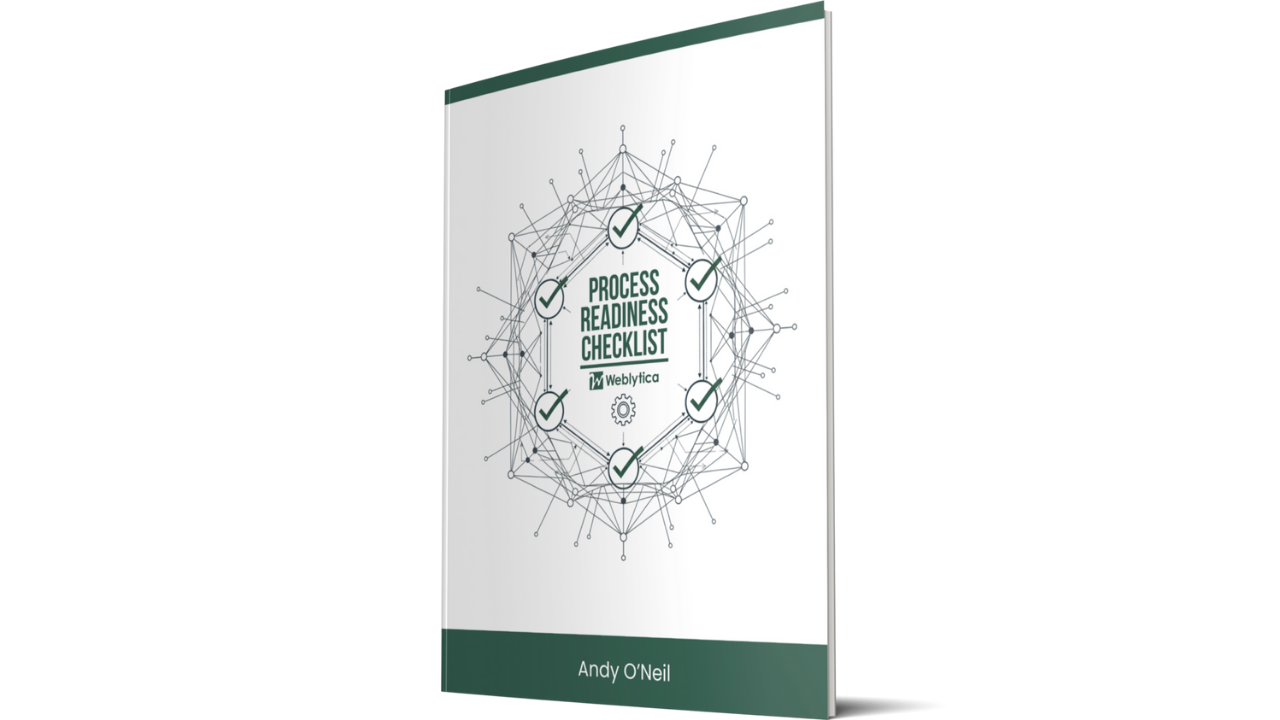
I put together a checklist of the questions I ask before building anything.
It's not content strategy. It's the actual diagnostic I use with clients.
Born from 800+ sessions. Refined by all the times I watched people automate the wrong thing.
If your process passes these questions, you're ready to build. If it doesn't, you'll know exactly what to fix first.
📥 The Process Readiness Checklist Free. No email required.
The Irony
Yes, I'm aware of the irony here.
I'm in the 1% who posts. I'm writing content about being skeptical of content. I'm on LinkedIn telling you to be careful about who you listen to on LinkedIn.
The difference, I hope, is that I'm also in the smaller percentage who's actually done the work. For years. Hundreds of times. With real clients and real problems.
But you shouldn't take my word for it. That's kind of the whole point.
Vet me like you'd vet anyone else. Ask the hard questions. Look for the track record.
That's how you find the people worth learning from.
Andy "Posting About Why You Shouldn't Trust Posters" O'Neil
P.S. If you want to see the diagnostic in action instead of just reading about it, reach out to me. I'm happy to walk through the questions with you. No pitch, no pressure. Just the process.