I Don’t Keep Up With AI News. That’s the Point.
I learned about Claude’s latest features from a pop-up. Inside the tool. While I was working.

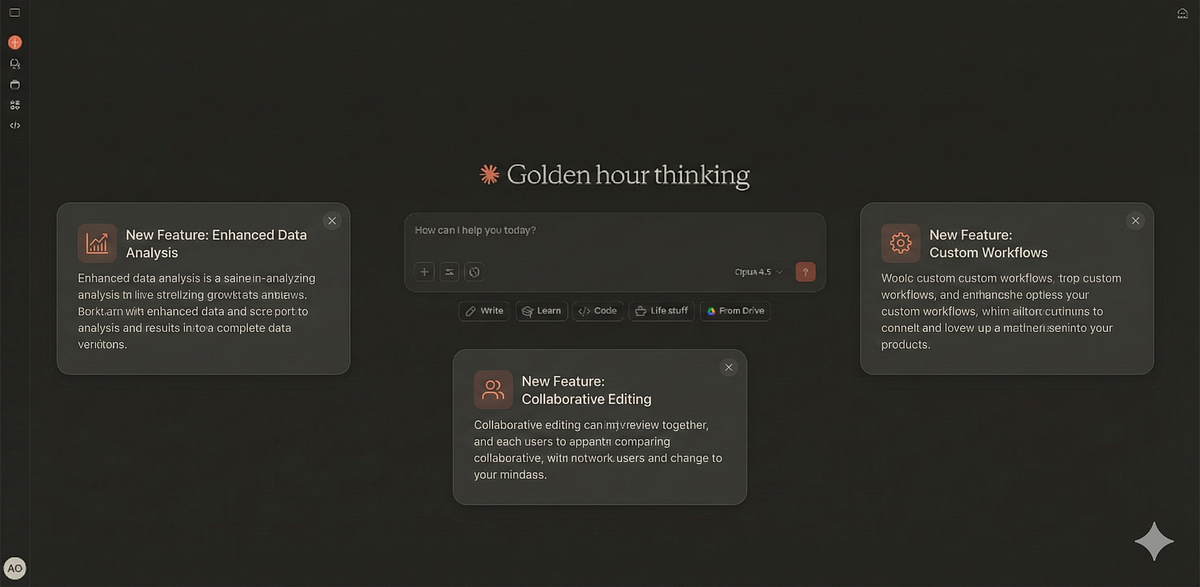
I learned about Claude’s latest features from a pop-up. Inside the tool. While I was working.
Not from a blog. Not from an email newsletter. Not from X, where I spend exactly zero minutes per week. Just a little notification that appeared while I was in the middle of actually doing something, suggesting I might want to try a thing that now exists.
I’m apparently supposed to feel bad about this.
Every week, my inbox fills with breathless announcements about what just shipped, what’s about to ship, and why everything is different now. LinkedIn serves me an endless buffet of “game-changing” developments that I absolutely must understand immediately or risk professional obsolescence. There’s a whole economy of people whose job is to watch AI news and then tell me about AI news, and I have successfully ignored almost all of them.
I’m a technician. I’m heads-down in the work. I build AI systems and automations for businesses, and I’ve conducted over 700 co-building sessions with clients who need things that actually function. This doesn’t leave a lot of time for tracking which model just benchmarked 2% better on a test I don’t understand.
And here’s the thing: it hasn’t mattered. Not once.
The AppSumo Breakup
I’m about to cancel my AppSumo Plus membership. This is the paid tier — $99 a year — where you get 10% off their Lifetime Deal products and early access to the newest tools.
I’ve done the math. About 1 in 10 purchases has been worth anything. The rest are junk I return within the refund window, or worse, tools that sit in my account unused because the FOMO wore off faster than my curiosity.
AppSumo is masterful at this. They’ve built an entire business model on the fear that you’re missing something. Limited quantities. Countdown timers. “Only 47 left at this price.” The psychology is flawless. The products, frequently, are not.
What I’ve realized — slowly, expensively — is that I was optimizing for the wrong thing. I was looking for what’s new when I should have been looking for what’s working. These are different questions with very different answers.
New is easy to find. It announces itself constantly. Working is quieter. You have to watch what people actually ask for, what problems keep showing up in real conversations, what tools clients mention because they solved something — not because they saw a launch post.
I don’t need a membership to chase new. I need attention to notice working.
What Actually Disrupts My Day
You want to know my only AI-related panic? It’s when Anthropic’s Claude AI has an outage.
That’s it. That’s the entire list.
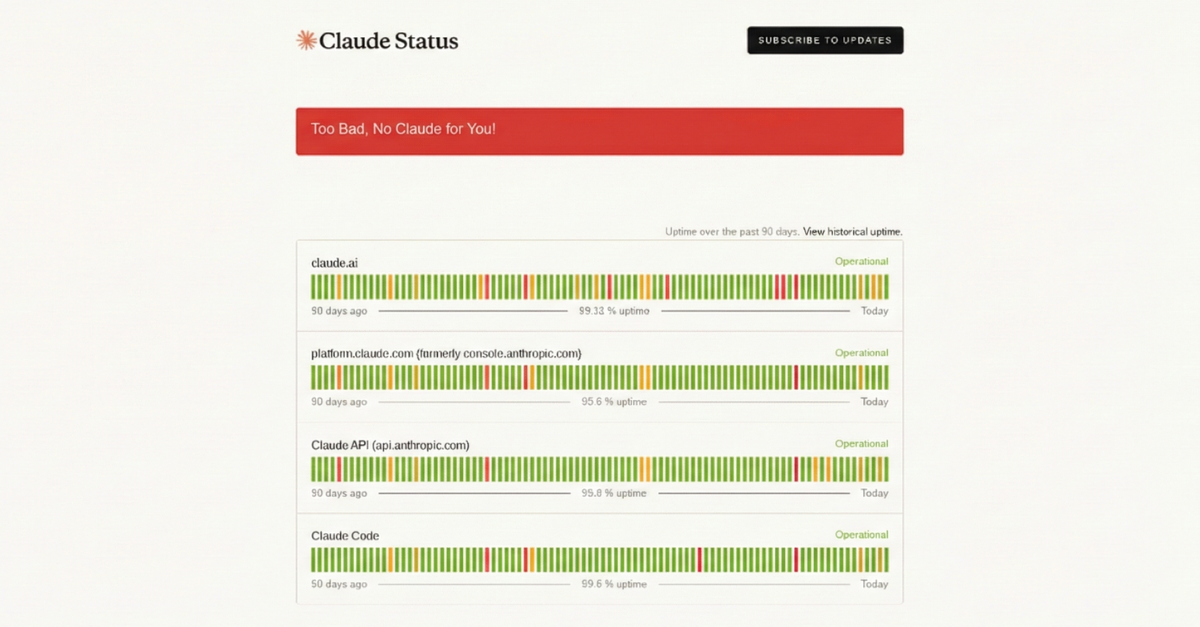
Not “OpenAI released a new model.” Not “Google announced something.” Not “there’s drama in the AI safety community.” When Claude goes down, I have to stop my productive day — where I’m working inside highly trained Projects that know my business, my clients, my workflows — and do deeply unproductive things like check my email.
(Though, to be fair, I’ve automated and streamlined my inbox to the point where even that doesn’t take long. The backup plan for AI downtime is, apparently, more automation. I’m not sure what this says about me.)
The point is: I’ve built real dependency on something stable. Not something new. Something that shows up, does the work, and doesn’t require me to re-learn it every six weeks.
This is what infrastructure looks like. You don’t think about your plumbing until it breaks. You don’t think about QuickBooks until tax season. And I don’t think about my AI tools until they go down — which, thankfully, is rare.
Meanwhile, I’ve missed every single news cycle. Every “everything is different now” moment. Every panic.
No problems. The tools I use still work. The clients I serve still get results. The business keeps running.
The Rule
Here’s how I actually learn new tools: a client asks for one.
That’s the whole system. When someone in a co-building session says “can we connect this to [thing I’ve never used]?” or “I need a widget that does [specific function]” — then I go research. Then I learn. Then I figure out if it’s worth integrating into the work we’re doing together.
Until there’s demand in my world, I ignore it.
This sounds obvious when I write it down, but it’s the opposite of how most people in this industry operate. The default mode is: something launches, you learn about it, you figure out where it might fit, you look for problems it could solve.
My mode is: a problem exists, a client has it, now I go find what solves it.
The difference is who’s driving. In the first mode, vendors drive your attention. In the second mode, clients do. I prefer to be useful to the people actually paying me.
Permission Slip
If you’ve felt behind on AI news — if you’ve felt that creeping guilt that everyone else understands what’s happening and you’re falling further back — I want to offer you something.
You might be fine.
The people obsessively tracking every development aren’t necessarily building anything. The people building things don’t necessarily have time to track every development. You have to pick. And if you’ve picked building — if you’ve picked doing the actual work, serving actual clients, solving actual problems — then the distance from the noise isn’t a bug. It’s the strategy.
Steady and safe isn’t a consolation prize. It’s not what you settle for when you can’t keep up. It’s what actually works, compounded over time, with clients who need things to function on a random Tuesday eight months from now.
I don’t know what got announced this week. I learned about the last update from a pop-up.
I’m fine.
You might be too.
I help business owners build AI systems that don’t make them want to throw their laptop into traffic. I share what I’m learning in my newsletter, build automations and AI stuff on YouTube, and have conducted 700+ co-building sessions. Connect on LinkedIn if you want more of this. I’m not entirely sure what “this” is either.