Everything I Build Is Disposable

The technology won't last. That was never the point.
The Call That Ran Long
Last week I wrapped up a client call and we just... kept talking. For over an hour. About family, work, our famiy dog. I had a full task list waiting. I didn't care.
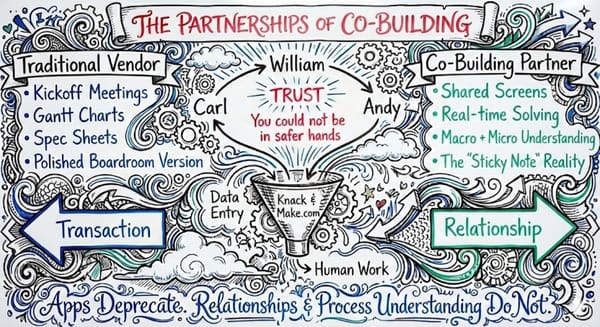
His name is William, and he was referred to me by my friend Carl — a former client who retired recently and trusted me enough to hand William off with five words: "You could not be in safer hands."
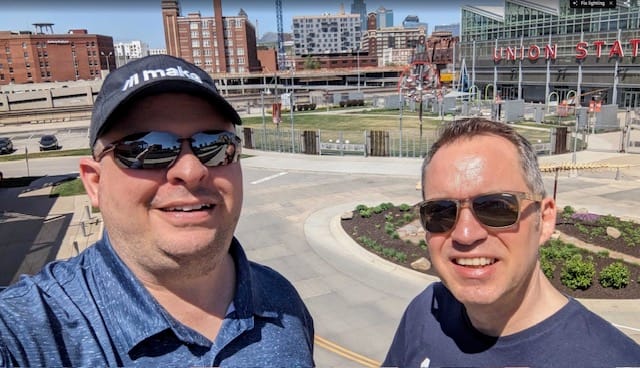
Carl and I started as a standard co-building engagement. Weekly sessions, screen sharing, walking through Make.com scenarios together. He'd ask questions, I'd build while explaining my thinking, and somewhere between the second and third month, the sessions stopped feeling like work. We'd finish the automation and just keep talking. About his business in the UK, about my kids, about what it means to build something that actually matters.
Now he's a friend who flew from the UK to visit me in Kansas City two years ago. That kind of thing doesn't show up on an invoice.
The Project That Disappeared
I think about Carl and William a lot because of something I realized back in 2022. I'd just finished my biggest freelance project — a complex ERP system for managing investors visiting a major southern city. It was weeks of co-building with the team there, real collaborative work where we figured out the data flows together, wrestled with edge cases, and built something that genuinely solved a messy problem.
Ten months later, the team killed it. Just walked away from the whole thing.
I found out on a random Tuesday. Nobody called to explain. Nobody asked if the system could be saved or handed off. They just emailed and asked how to cancel the accounts that ran everything. All those hours of careful work, all those sessions where we mapped out how visitors move through a city, all that accumulated understanding — gone. Like it never happened.
I felt empty. Not angry, exactly. Just hollow. The kind of feeling you get when you realize something you poured yourself into left no mark on the world at all.
"That's when it hit me. Everything I build is disposable. No-code automations, integrations, workflows — none of it will exist in ten years, let alone fifty."
That realization sat heavy for a while. Because if the work itself doesn't last, what exactly am I doing here?
The Carpenter Problem
I grew up around people who built things you could touch. My grandfather's generation measured their lives by what they left behind — houses, barns, roads. Things their grandchildren would drive past and point to.
Arrowhead Stadium opened for the 1972 NFL season, three years before I was born, and it's still standing. I ride my bike past it on a trail near my house, and the sheer physical presence of that place reminds me of something uncomfortable: nobody's going to point at a Make.com scenario in 2080 and say "your grandfather built that."
A carpenter who builds hospitals leaves a footprint his family can visit. An ironworker who raises bridges creates something that holds weight for generations. Even a plumber who runs pipes through a new school creates infrastructure that serves kids who aren't born yet. There's something deeply satisfying about physical permanence, about knowing your work will outlive you by decades.
I don't get that. Nobody in my line of work does.
The average lifespan of a business automation is somewhere between 18 months and three years before it gets rebuilt, replaced, or abandoned. The platforms themselves move even faster — APIs change, tools get acquired, pricing models shift, and suddenly the elegant integration you built last quarter needs a complete overhaul because someone at a software company decided to deprecate an endpoint.
So I sat with that for a while. If everything I build has an expiration date, what's the point of building it well? Why put care into something that's going to be torn down anyway?
What I Got Wrong
The answer didn't come from thinking about it. It came from Carl flying 4,000 miles to eat barbecue with me.
He didn't come to Kansas City because of a scenario I built him. He didn't come because I helped him automate his invoicing or help with his client's projects. Those systems were already built by the time he booked his flight. The specific work we did together was, by that point, mostly done.
He came because of what happened between the clicks.
When you sit with someone in their actual work — their real systems, their real problems, their real frustrations — week after week, something shifts. The co-building sessions become something more than a service engagement. You learn how they think. They learn how you solve problems. You start finishing each other's diagnostic sentences. And somewhere in there, without either person planning it, a professional relationship turns into genuine trust.
That trust is what Carl was acting on when he flew across an ocean to spend a weekend in my city. And it's what he was acting on when he retired and handed me William with five words instead of a transition document.
"He didn't hand me a spec sheet or a project brief. He said five words: 'You could not be in safer hands.' That's not a deliverable. That's a legacy."
I'd been measuring my work by the wrong thing. I was looking at the automations, the scenarios, the systems — and feeling empty when they disappeared. But the technology was never the point. It was the vehicle. The sessions where I build alongside someone, thinking out loud, solving problems together in real time — those weren't just a delivery method for automation. They were the actual work.
The co-building is where the trust gets built. The automation is just the excuse to be in the room together.
The Handoff
William and I are early in our work together. He's sharp, he asks good questions, and he knows exactly what how he wants his technology to work.
But here's what I keep coming back to: William didn't find me through a Google search. He didn't see a LinkedIn post or download a lead magnet. He's working with me because a man he trusted for years looked at his own retirement and thought about who would take care of the people he was leaving behind.
That's not marketing. That's not a referral program. That's the kind of thing that only happens when you've built something real with someone — something that has nothing to do with the technology and everything to do with how you showed up while building it.
Carl could have given William a list of consultants. He could have posted in a forum or made three introductions and let William choose. Instead, he sent an introduction email and said "You could not be in safer hands" because he'd sat across from me (virtually) for enough hours to know exactly how I work and what I'd do with that trust.
I think about this every time I'm tempted to measure my work by the systems I've built. The systems are temporary by nature. But what Carl built between us — and what he passed to me through William — that's compounding. That's still growing. That's the thing that actually lasts.
What Stays
The ERP system I built in 2022 is gone. Most of the Make.com scenarios I've built over the past several years have been deprecated, rebuilt, or replaced by something else. If you went looking for a portfolio of my "greatest hits," you'd find abandoned dashboards and archived Slack channels.
But Carl is still my friend. William is still on my calendar. And the way they both got there had nothing to do with how elegant my automations were.
"The technology was always disposable. The trust never was."
I used to envy the carpenter. I used to wish I could build something my kids would drive past someday and feel proud of. And honestly, part of me still does. There's something beautiful about permanence that I'll never fully let go of.
But I've stopped chasing it in my work. Because the thing I actually leave behind isn't a system or a scenario or an automation that runs while I sleep. It's the fact that a man in the UK trusted me enough to hand me one of his clients when he walked away from the work. And the fact that his client trusted him enough to follow.
That's not disposable. That's the thing carpenters and automation consultants actually have in common — if they're doing it right. The best work isn't the structure. It's the trust the structure was built on.
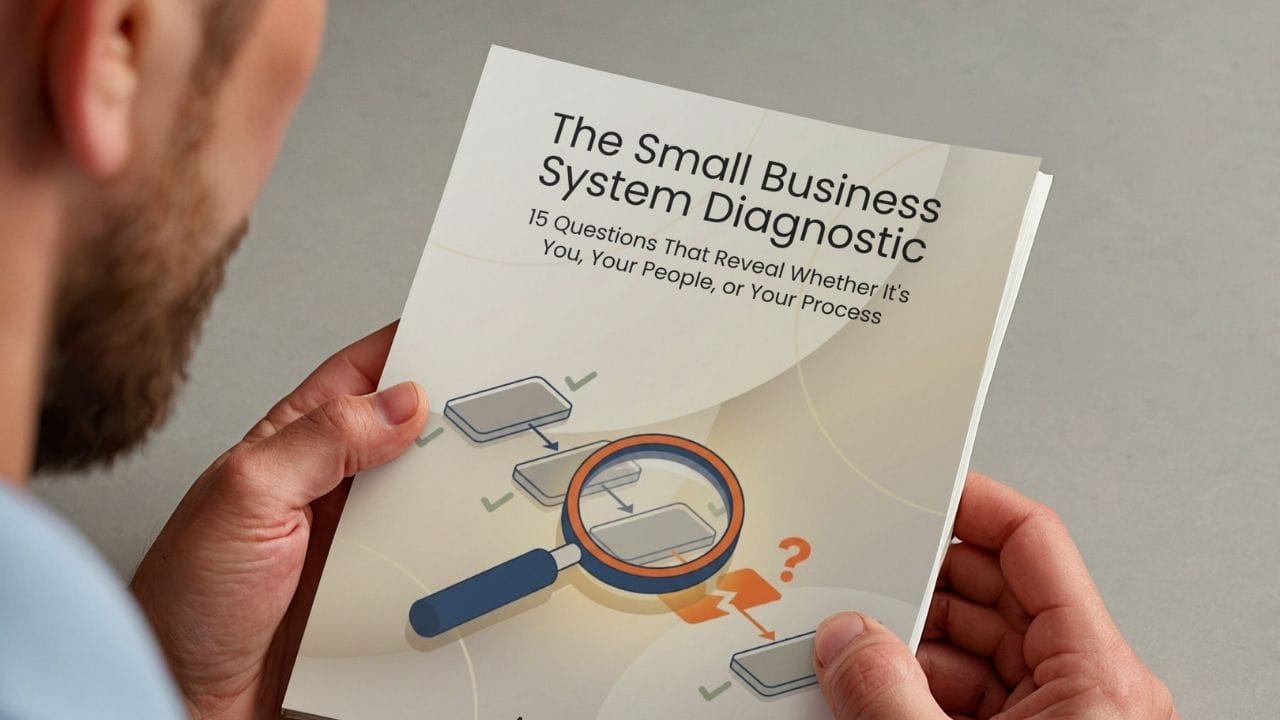
The Small Business System Diagnostic
15 Questions That Reveal Whether It's You, Your People, or Your Process